I remember testing this harvest stew with smoked sausage on an overcast afternoon when I wanted something that smelled like fall without hours of babysitting. The first pot I made had thin broth and mealy carrots — what I needed was structure. After one failed batch and a few adjustments, I landed on a method that keeps the sausage flavorful, the vegetables tender but intact, and the broth rich without being greasy.
This stew balances savory smoked sausage, winter squash, root vegetables, and a lightly thickened broth so it feels like a full meal in one bowl — perfect for family dinner nights or a weekend make-ahead. Below I explain the tweaks I tested so you won’t repeat the mistakes I made the first time.
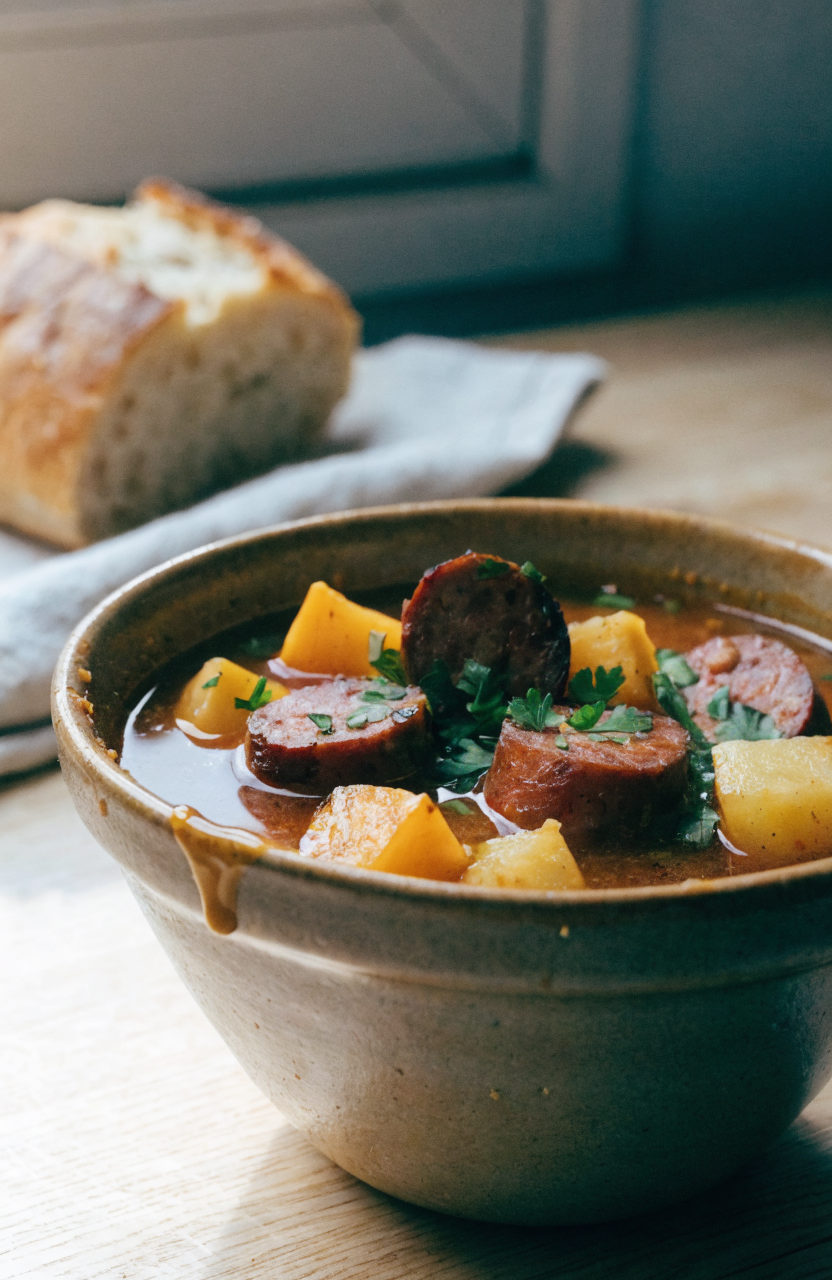
Why this harvest stew with smoked sausage works
The core technique is a two-stage simmer plus a light flour-roux finish that gives the broth body without masking the ingredients. During testing I noticed two common problems: thin, watery broth when vegetables released too much starch at once, and greasy surface sheen from the sausage. What fixed both was browning the sausage just enough, sautéing aromatics in the rendered fat, then simmering the squash and root vegetables gently in a covered pot to let flavors meld without breaking down the vegetables. A small pan roux (butter and flour) whisked into the hot broth at the end rounds out the texture and helps the stew cling to spoonfuls of sausage and vegetables.
Key ingredient ratios I settled on are roughly 1:2 liquid-to-solid by volume and a moderate 12–16 ounces of smoked sausage per 6 servings; that keeps the meat prominent without overwhelming the vegetables. The final result is a stew with a glossy, slightly thickened broth, tender but not mushy squash and potatoes, and a smoky-meaty anchor in every bite.
Key takeaways
- Browning the sausage and using some of its fat for aromatics adds depth while avoiding greasiness.
- Simmer vegetables gently in two stages to prevent a watery broth and overcooked squash.
- A small butter-and-flour roux at the end gives body without heavy cream.
Ingredients you’ll need and what to substitute
This harvest stew with smoked sausage relies on a few seasonally available vegetables plus pantry staples. The smoked sausage provides the smoky-salty backbone, but you can use turkey or chicken sausage if you prefer a leaner option. Winter squash can be butternut, kabocha, or acorn; each has a slightly different texture and sweetness — butternut breaks down a little more, while kabocha stays firmer. Yukon gold potatoes hold their shape well; red potatoes are a fine substitute. If you want a gluten-free version, substitute cornstarch mixed with cold water for the flour roux; prepare the slurry off heat, whisk it into the stew, then return the pot to a gentle simmer for 1–2 minutes to activate the thickener.
Important ingredients and notes:
- Smoked sausage (12–16 ounces): Sliced into 1/2-inch rounds. Look for fully cooked smoked sausage (e.g., kielbasa-style) so you only brown it.
- Onion and garlic: Use a yellow or sweet onion; mince garlic for even distribution.
- Carrots and celery: Standard mirepoix components that add sweetness and texture.
- Winter squash (about 2 cups cubed): Peel and cube evenly so they cook uniformly.
- Potatoes (about 2 cups cubed): Yukon gold recommended for creamier texture.
- Chicken or vegetable broth: Use low-sodium if you plan to control salt.
- Tomato paste: Adds umami and slight acidity to balance the smoky sausage.
- Fresh herbs: Thyme and parsley for finishing; dried thyme is okay at 1/3 the fresh amount.
Equipment
Essential items for a smooth cook:
- 6-quart Dutch oven or heavy 5–6 quart pot with lid (important for even simmering)
- Large wooden spoon or heatproof spatula
- Chef’s knife and cutting board
- Measuring cups and spoons
- Small sauté pan for making the roux (you can use the main pot if you prefer)
How to make harvest stew with smoked sausage
Prepare and brown
Start by trimming and cutting all vegetables into roughly 1-inch pieces so they cook at a similar rate. Pat the sausage slices dry with a paper towel to encourage browning. Heat your Dutch oven over medium heat, add 1 tablespoon olive oil, and when shimmering add the sausage in a single layer. Brown without crowding, about 2–3 minutes per side, then transfer the sausage to a plate. Leave about 1 tablespoon of the rendered fat in the pot and discard excess if there’s more than that.
Sauté aromatics and build the base
Reduce heat to medium-low, add the diced onion, carrot, and celery to the rendered fat and sauté until translucent and beginning to color, about 6–8 minutes. Add minced garlic and 1 tablespoon tomato paste; cook 30–45 seconds until fragrant. This step caramelizes sugars and develops a deeper base flavor for the stew.
Two-stage simmer for stable texture
Return the browned sausage to the pot along with the cubed potatoes and 3 cups of broth. Bring to a gentle simmer, cover, and cook 10 minutes. This first gentle simmer lets the potatoes start to tenderize without releasing all their starch at once. After 10 minutes, add the cubed squash and an additional 1 cup of broth. Partially cover and simmer until all vegetables are fork-tender but not falling apart, another 10–12 minutes. Taste and season with 1 teaspoon kosher salt and 1/2 teaspoon freshly ground black pepper, adjusting to your broth and sausage saltiness.
Finish with a light roux and fresh herbs
To thicken, melt 2 tablespoons unsalted butter in a small pan over medium heat, whisk in 2 tablespoons all-purpose flour, and cook, whisking, for 1–2 minutes to remove the raw flour taste. Slowly whisk in about 1/2 cup of hot stew liquid to create a smooth slurry, then pour this back into the pot while stirring. Simmer 2–3 minutes to let the stew thicken slightly. Stir in a tablespoon chopped fresh thyme leaves and a handful of chopped parsley. If you prefer a gluten-free thickening, mix 2 tablespoons cornstarch with 2 tablespoons cold water, whisk the slurry into the stew off the heat, then return the pot to a gentle simmer for 1–2 minutes until the broth thickens and becomes glossy.
Serve hot with a scattering of fresh parsley and crusty bread. The stew should be glossy and coat the back of a spoon, with distinct pieces of squash and potato alongside sausage slices.
Things I learned the hard way
- Don’t overcrowd when browning sausage — crowded slices steam instead of brown. Pat them dry and work in batches.
- If you add squash too early it dissolves into the broth; add it in the second simmer stage so it keeps shape.
- Skipping the small roux leads to a thin broth; a small amount of butter and flour is all you need for body.
- If the stew tastes flat, a teaspoon of apple cider vinegar or a squeeze of lemon brightens it without changing the profile.
- Over-salting is easy if your broth and sausage are both salty; use low-sodium broth or add salt at the end after tasting.
- My first attempt used frozen squash and it turned mushy; thaw thoroughly and drain or better yet use fresh cubed squash.
Variations to try
- White bean boost: Add a 15-ounce can drained and rinsed white beans in the final 5 minutes for extra fiber and protein; reduce broth by 1/2 cup.
- Smoky tomato: Stir in 1/2 cup crushed tomatoes with the broth for a heartier, slightly acidic stew; you may want an extra teaspoon of sugar to balance acidity.
- Spicy kick: Add 1/2 teaspoon crushed red pepper flakes with the garlic and oil for a gentle heat; increase to 1 teaspoon if you prefer more spice.
- Vegetarian swap: Replace sausage with smoked tempeh or smoked paprika-roasted mushrooms and use vegetable broth; the roux still works the same.
Storage, freezing, and reheating
Refrigerate leftovers in an airtight container for up to 4 days. The stew thickens as it cools; thin with a splash of broth or water when reheating. For best texture, reheat gently on the stovetop over low heat until barely simmering, about 6–8 minutes for a single portion. Freezing is possible: cool completely, then portion into freezer-safe containers and freeze for up to 3 months. Thaw overnight in the refrigerator and reheat gently. Note that squash may soften further after freezing; if you prefer a firmer texture, freeze without squash and add fresh cubed squash when reheating.
What to serve with harvest stew with smoked sausage
Good pairings keep the meal balanced: serve with crusty country bread or buttered egg noodles for soaking up the broth; a simple green salad with apple slices adds brightness; or roasted Brussels sprouts for extra texture contrast. For a lighter side, steamed green beans with lemon and olive oil work well.

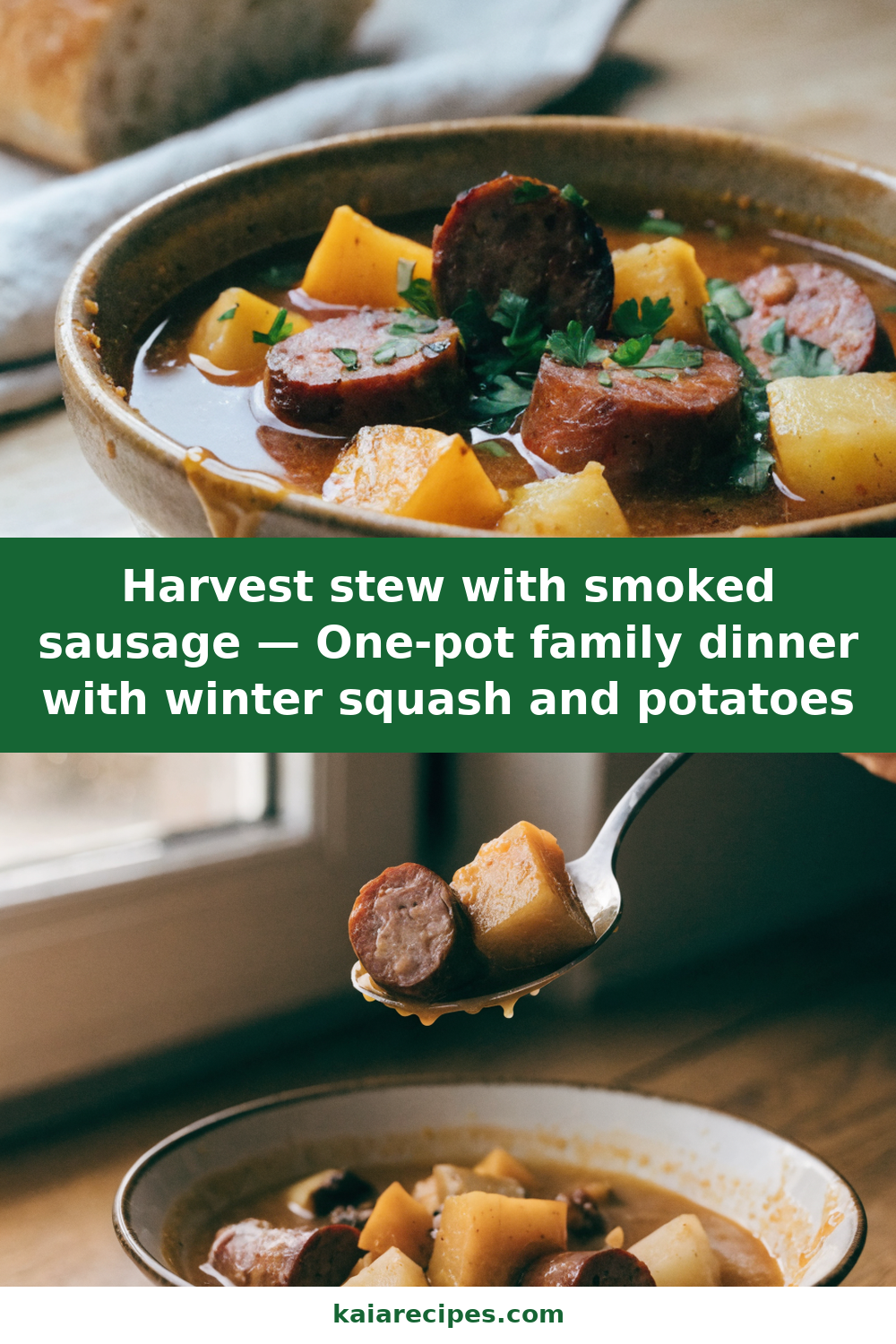
Harvest Stew with Smoked Sausage
Ingredients
Equipment
Method
- Pat the sausage slices dry with paper towels and cut vegetables into roughly 1-inch pieces for even cooking.
- Heat a 6-quart Dutch oven over medium heat and add 1 tablespoon olive oil. Brown the sausage in a single layer, 2–3 minutes per side, then transfer to a plate leaving about 1 tablespoon of fat in the pot.
- Add the diced onion, carrots, and celery to the pot and sauté over medium-low heat until translucent and beginning to color, 6–8 minutes. Add minced garlic and 2 tablespoons tomato paste and cook 30–45 seconds until fragrant.
- Return the browned sausage to the pot with the cubed potatoes and add 3 cups of broth. Bring to a gentle simmer, cover, and cook 10 minutes.
- Add the cubed squash and the remaining 1 cup broth, partially cover, and simmer another 10–12 minutes until all vegetables are fork-tender but not falling apart. Taste and add 1 teaspoon kosher salt and 1/2 teaspoon black pepper, adjusting as needed.
- In a small sauté pan, melt 2 tablespoons butter over medium heat, whisk in 2 tablespoons flour and cook 1–2 minutes. Whisk in 1/2 cup hot stew liquid to form a smooth slurry, then stir it into the stew and simmer 2–3 minutes to thicken. If you need gluten-free thickening, whisk together 2 tablespoons cornstarch and 2 tablespoons cold water to form a slurry, stir it into the stew off the heat, then return the pot to a gentle simmer for 1–2 minutes until thickened. Stir in 1 tablespoon chopped fresh thyme and 2 tablespoons chopped parsley.
- Ladle into bowls, garnish with additional parsley, and serve with crusty bread or noodles as desired.
Notes
Frequently asked questions
Can I use frozen vegetables in this stew? Yes, but thaw and drain winter squash before adding to avoid adding excess water; add it in the second simmer stage to reduce mushiness. Frozen potatoes are not recommended because they tend to break down more and create a starchy broth.
How do I keep the broth from being greasy? Brown the sausage and drain off excess fat, leaving 1 tablespoon in the pot for sautéing aromatics. Skim fat from the surface after the first simmer if necessary, or refrigerate and remove solidified fat before reheating.
Can I make this in a slow cooker? You can adapt it, but brown the sausage and sauté the aromatics first for best flavor. Cook on low for 4–6 hours, add squash in the last hour, and avoid overcooking to prevent mushy vegetables.
Is this recipe freezer-friendly? Yes, freeze fully cooled portions for up to 3 months. Expect softer squash after freezing; consider leaving out the squash and adding fresh when reheating if you prefer firmer texture.
How can I thicken the stew without flour? Mix 2 tablespoons cornstarch with 2 tablespoons cold water to make a slurry, whisk it into the stew while the pot is off the heat, then return the pot to a gentle simmer for 1–2 minutes until the broth thickens.
Can I reduce the sodium? Use low-sodium broth and a lower-sodium smoked sausage, then season to taste at the end. A splash of vinegar can enhance flavor without adding salt.
Closing
This harvest stew with smoked sausage became my go-to when I wanted a filling, balanced weeknight meal that still tasted like a slow-cooked pot. The two-stage simmer and small roux were the changes that made the difference — they hold the texture and flavor together in a way that keeps the bowl satisfying even after reheating. Serve with crusty bread or buttered noodles and a simple green salad for a complete, comforting meal.

Leave a Reply