I remember the first time I tried to build enchilada flavor without rolling tortillas: it ended up mushy and one-note. That’s why I developed this black bean enchilada skillet—so you get the tangy, smoky sauce, soft-but-not-soggy squash, and intact beans all in a single pan in about 30 minutes. The black bean enchilada skillet is the kind of balanced weeknight meal that smells like cumin and roasted garlic and leaves you satisfied without a lot of cleanup.
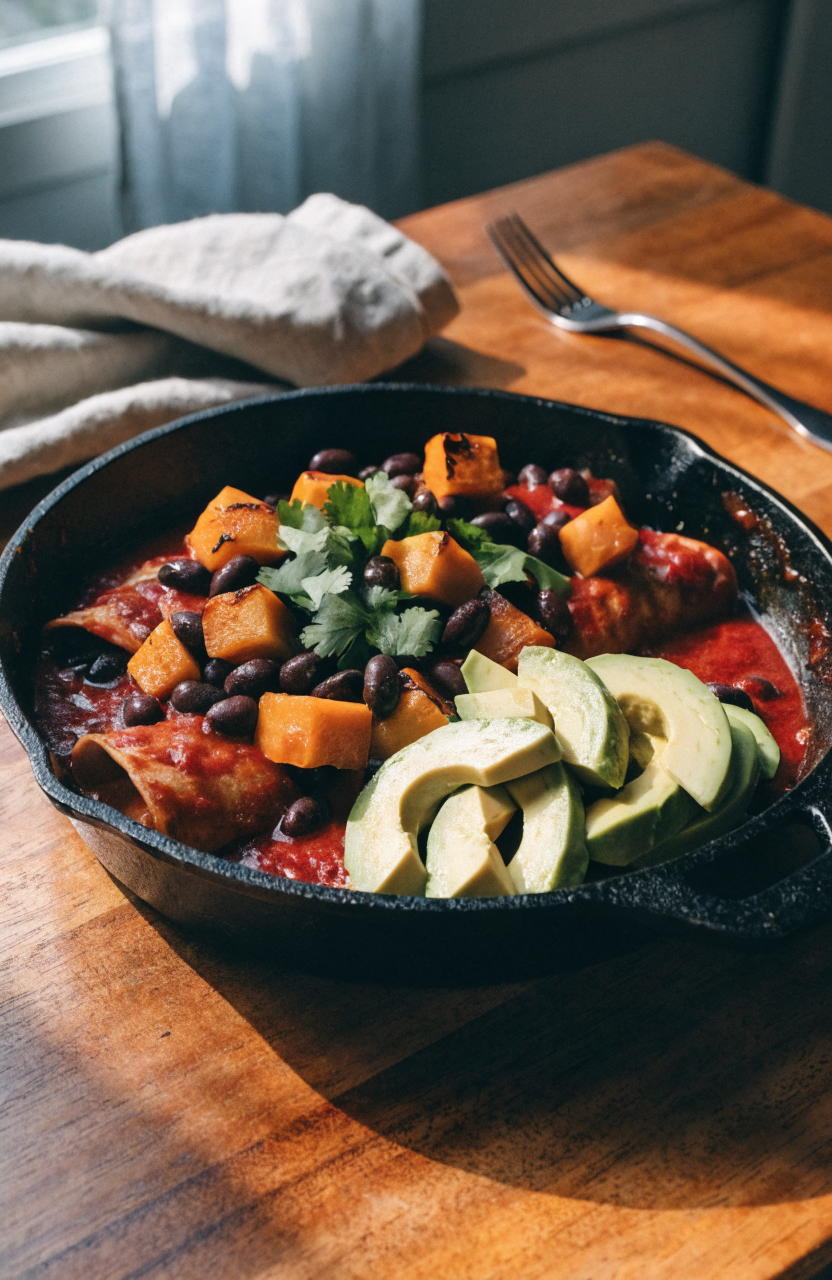
Why this black bean enchilada skillet works
This skillet focuses on three reliable techniques: quick-roasting or sautéing the squash to develop a caramelized surface, toasting and blooming the spices so the sauce tastes rounded, and finishing the pan briefly under a lid so liquids reduce without turning the vegetables to mush. I balanced the liquid-to-ingredient ratio so the sauce clings to the black beans and squash rather than pooling on the bottom. During testing I learned that adding the enchilada sauce and beans at slightly different times preserves the beans’ texture; the final result is bold saucy flavor with distinct, forkable pieces rather than a stew.
Key takeaways
- Roast or sauté the squash first to prevent sogginess and deepen flavor.
- Bloom spices in oil for the best aromatics and balanced sauce.
- Add beans later and simmer briefly so they stay intact and creamy.
Ingredients you’ll need and what to substitute
The star ingredients are canned black beans (for convenience and protein), a short-cooking squash—like butternut cut into 1/2-inch cubes—or diced sweet potato if you prefer, and a good-quality enchilada sauce (red or green depending on preference). I use one cup of low-sodium vegetable broth to thin the sauce slightly; water will work in a pinch but reduces depth. For richness, a single tablespoon of tomato paste and a squeeze of lime brighten the finished dish. If you don’t have enchilada sauce, mix 1 cup tomato sauce with 1 tablespoon chili powder, 1 teaspoon cumin, and 1/2 teaspoon smoked paprika and simmer briefly.
Substitutions: swap canned black beans for pinto beans (similar cooking time and texture), replace butternut with 2 cups diced sweet potato (cook a few minutes longer), or use cooked shredded rotisserie chicken if you want a non-vegetarian protein (stir it in at the end and warm through). For dairy, finish with shredded cheddar or a sprinkle of queso fresco; plant-based cheese works for a vegan option.
Equipment
You need a 12-inch heavy skillet (preferably cast iron or heavy stainless) with a lid for even heat and good browning; a 10-inch skillet will work for smaller batches. A sharp chef’s knife and a wooden spoon or spatula are essential. If desired, have a rimmed baking sheet ready to roast the squash in the oven for the caramelized option.
How to make the black bean enchilada skillet
Prep
Trim and peel the squash and cut into 1/2-inch cubes so the pieces cook evenly. Drain and rinse the canned black beans. Mince one small onion and two garlic cloves. Measure spices and open the enchilada sauce so everything is within reach. Preheat your skillet over medium-high heat while you prep—the hot pan helps develop color quickly.
Sear the squash
Add 1 tablespoon oil to the hot 12-inch skillet and add the diced squash in a single layer. Let it cook undisturbed 3–4 minutes until the undersides brown, then toss and cook another 2–3 minutes until most pieces show caramelized edges and are nearly tender when pierced with a fork. If your squash is taking too long, reduce heat to medium to avoid burning while allowing interior to soften.
Build the sauce and aromatics
Push the squash to the edge, reduce heat to medium, add another teaspoon of oil if the pan looks dry, then add the minced onion. Cook 2–3 minutes until translucent, then add the garlic and toast 30 seconds. Sprinkle in 1 tablespoon chili powder, 1 teaspoon ground cumin, and 1/2 teaspoon smoked paprika; stir to bloom the spices for 20–30 seconds. Stir in 1 tablespoon tomato paste and cook 30 seconds to deepen its flavor.
Finish the skillet
Add 1 cup of enchilada sauce and 1 cup low-sodium vegetable broth to the skillet, scraping up browned bits. Bring to a simmer, then stir in the drained black beans. Reduce heat to medium-low and simmer uncovered 4–6 minutes until the sauce thickens and coats the beans and squash. Taste and season with salt and a squeeze of lime (about 1 tablespoon). Sprinkle 1/2 cup shredded cheddar over the top if using, cover for 1–2 minutes to melt, then serve. The whole stovetop process takes about 20–25 minutes once prep is done.
Things I learned the hard way
- Don’t add the beans too early—during early testing I added the beans with the squash and the beans split and turned chalky; adding them after the sauce comes together preserves creaminess.
- Cut squash uniformly—pieces that are too large stay raw while smaller ones fall apart.
- Use a hot pan for browning; low heat gives you pale, steamed squash instead of caramelized flavor.
- If your sauce tastes flat, a teaspoon of lime juice or a pinch of salt brightens it immediately.
- Avoid overcrowding the skillet—if you double the recipe, cook the squash in two batches so it browns properly.
Variations to try
- Cheesy bake: transfer the finished skillet to a 400°F oven for 5–7 minutes after topping with cheese to get bubbly browned edges; watch closely so it doesn’t dry out.
- Green chile swap: use green enchilada sauce and add roasted corn for a Southwestern twist—no timing change required.
- Grain bowl: serve the skillet over cooked brown rice or quinoa; if serving over hot grains, reduce simmer time by 1–2 minutes so the sauce stays saucy.
- Spicy boost: add 1 diced jalapeño with the onion and remove seeds for less heat; reduce chili powder if you prefer milder flavor.
Storage, freezing, and reheating
Refrigerate leftovers in an airtight container for up to 4 days. To reheat, warm gently in a skillet over medium-low with a splash of water or broth (1–2 tablespoons) to loosen the sauce, about 4–6 minutes, stirring occasionally. This recipe freezes well: cool completely, pack into a freezer-safe container for up to 3 months, and thaw overnight in the refrigerator before reheating. Expect a minor softening of the squash after freezing; quick reheating in a skillet helps refresh texture.
What to serve with black bean enchilada skillet
This skillet pairs well with simple sides that add color or crunch: a crisp shredded cabbage slaw with lime vinaigrette, cilantro-lime rice, or warm corn tortillas for scooping. For a cooling contrast, serve a dollop of plain Greek yogurt or sliced avocado. A simple green salad with a citrus dressing also balances the rich enchilada flavors.
Serving tips and troubleshooting
For the best presentation, spoon the skillet into shallow bowls and add any optional toppings just before serving so textures remain distinct. If you plan to serve the dish to a group, prepare garnishes—chopped cilantro, lime wedges, sliced avocado, and crumbled cheese—so guests can customize each portion. When reheating leftovers on the stovetop, use a low flame and add only a splash of broth; this keeps the sauce loose without thinning it out. If the sauce becomes too thick during reheating, stir in another tablespoon of broth at a time until it reaches the desired consistency. Should the squash become softer than you like after freezing, a quick sauté in a dry skillet for a minute or two will revive some surface texture without changing flavor.
For adjusting salt and acidity, always taste after the short simmer and after any added garnishes. A small pinch of salt or a squeeze of lime can transform a flat sauce into something bright and layered. If the chili powder you use is particularly smoky or spicy, start with less and add more to taste at the end of the simmer. When preparing this dish ahead, keep the beans and sauce together but hold off on avocado and fresh herbs until serving to maintain their color and texture. These simple steps preserve the balance between saucy and textured elements so each bite stays satisfying.
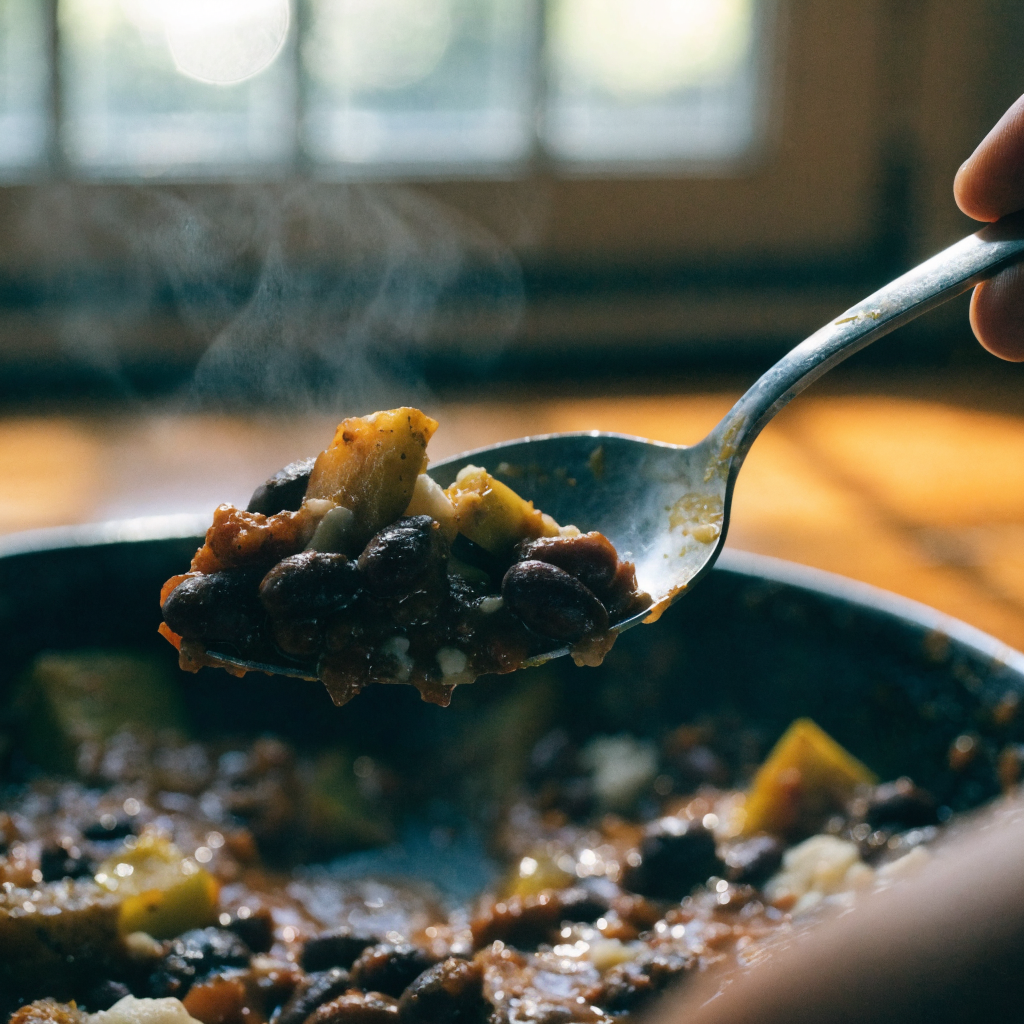
30-Minute Black Bean Enchilada Skillet
Ingredients
Equipment
Method
- Peel and dice the butternut squash into 1/2-inch cubes, rinse and drain the black beans, and mince the onion and garlic; have the enchilada sauce and broth measured.
- Heat a 12-inch skillet over medium-high heat and add 1 teaspoon oil. Add the diced squash in a single layer and let brown undisturbed 3–4 minutes; toss and cook another 2–3 minutes until most pieces show caramelized edges and are nearly fork-tender.
- Push squash to the side, reduce heat to medium, add remaining 2 teaspoons oil if needed and the diced onion; cook 2–3 minutes until translucent. Add garlic and cook 30 seconds. Stir in chili powder, cumin, and smoked paprika and toast 20–30 seconds, then stir in tomato paste and cook 30 seconds.
- Pour in the enchilada sauce and vegetable broth, scraping up browned bits. Bring to a simmer, then stir in the drained black beans. Reduce heat to medium-low and simmer uncovered 4–6 minutes until sauce thickens and coats the ingredients.
- Stir in lime juice, season with salt and pepper, sprinkle cheese evenly over the top if using, cover for 1–2 minutes to melt, garnish with cilantro and avocado, and serve hot.
Notes
Frequently asked questions
Can I use frozen squash? Yes—thaw and pat dry first, then sauté a bit longer and drain any excess water; frozen squash can release moisture and dilute the sauce.
Is this recipe vegetarian? Yes, the base recipe is vegetarian; you can add cooked chicken if you want more animal protein—stir it in at the end and warm through.
Can I make this gluten-free? Yes—ingredients listed are naturally gluten-free, but check the labels on enchilada sauce and spices to ensure they’re certified gluten-free if sensitive.
How can I make it less spicy? Use a mild enchilada sauce and reduce chili powder to 1 teaspoon; omit jalapeños and add extra lime to brighten flavor.
Can I double the recipe? You can, but cook squash in batches to maintain browning and prevent steaming; use a larger 14-inch skillet or split across two pans.
Closing
The black bean enchilada skillet is a dependable weeknight solution that gives you saucy, savory enchilada flavor with whole ingredients and minimal cleanup—just the kind of balanced dinner I reach for on busy evenings. I like it topped with crumbled queso fresco and a squeeze of lime for a bright finish.

Leave a Reply